Search engine optimization is not limited to what you do inside your website. Good content, clear titles, speed and a sound technical structure all matter, but building trust in Google also involves external signals. This is where off-page SEO comes in.
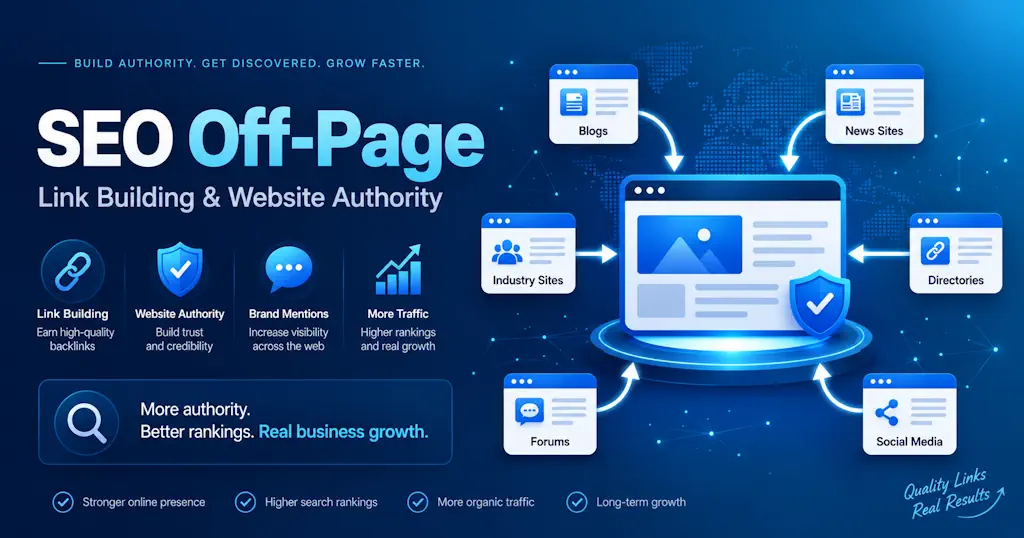
Off-page SEO covers activities outside a website that help strengthen its authority, credibility and visibility. For a WordPress site, a useful strategy can include link building, relevant backlinks, brand mentions, sponsored editorial content, collaborations, social media, digital PR and ongoing monitoring of the link profile.
This guide explains what off-page SEO means, how link building works, what makes a backlink valuable, which mistakes to avoid and how to build your site's authority gradually.
A quick definition of off-page SEO
Off-page SEO is the work done beyond your website to help it earn authority, a stronger reputation and visibility in search engines. Its main elements include backlinks, link building, brand mentions, relationships with relevant publishers, sponsored articles, digital PR and other sources of external trust.
What is off-page SEO optimization?
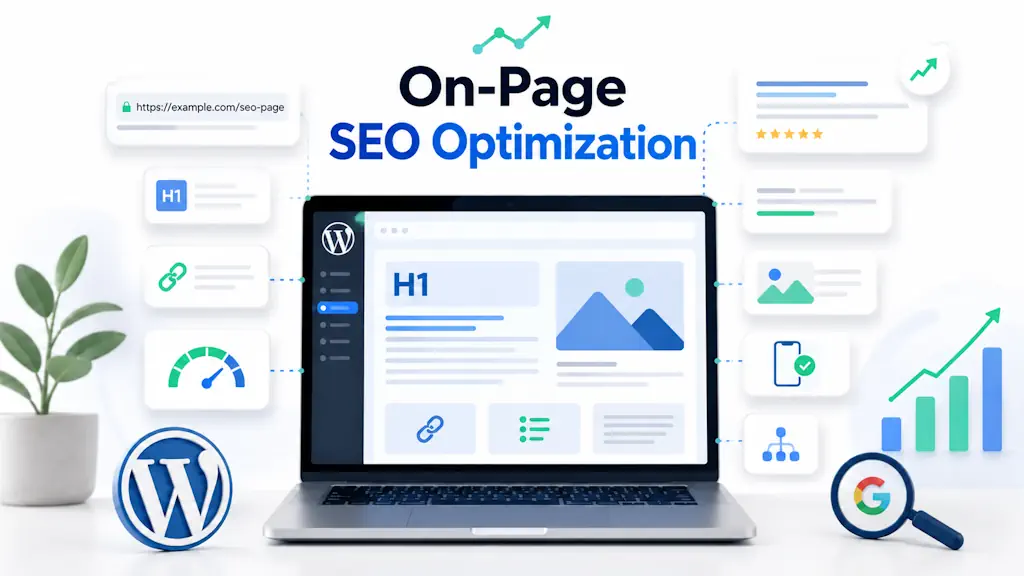
Off-page optimization means developing the external signals that show a website is relevant, credible and trustworthy. While on-page SEO deals with content, titles, meta descriptions, URLs and internal links, off-page SEO focuses on what happens beyond the site itself.
Those signals can include links from other websites, mentions of the brand, reviews, appearances in articles, recommendations, social sharing, editorial partnerships and digital PR campaigns. Their purpose is to support the site's authority and help search engines understand its relevance within its field.
In practice, off-page SEO is not about collecting as many links as possible. It matters more that the links and mentions are relevant, natural and connected with your website's subject.
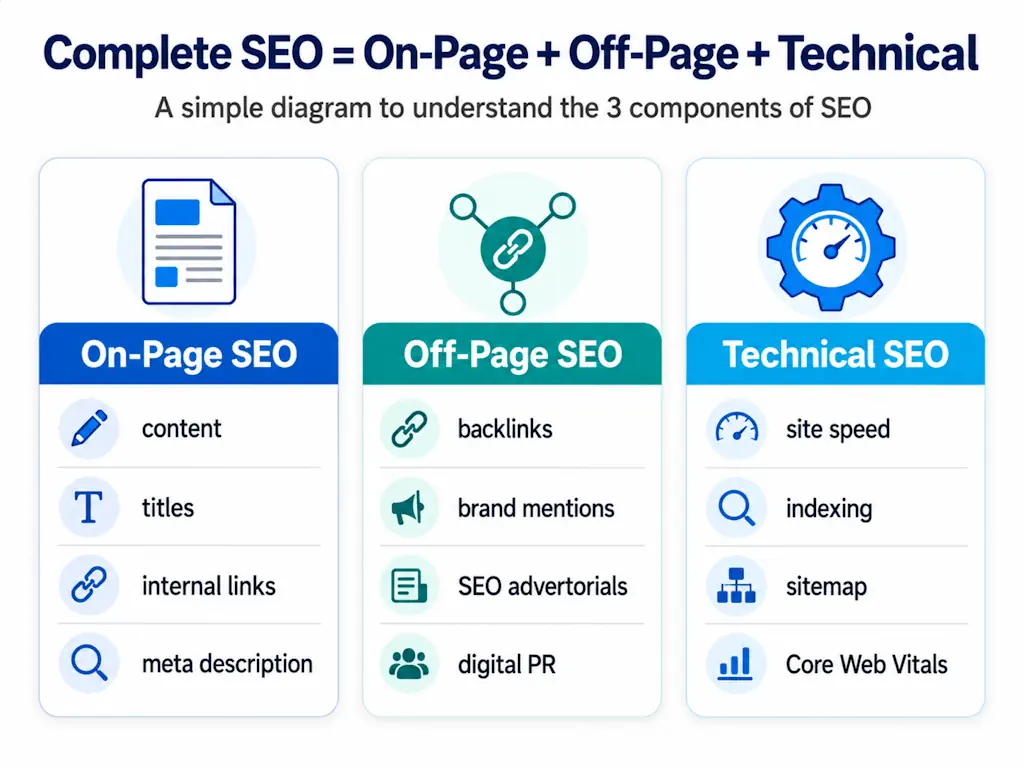
On-page SEO, off-page SEO and technical SEO
These three areas need to work together. A site may have good backlinks, but slow pages, weak content or a confusing structure will still limit its results.
| SEO area | What it covers | Examples | Main role |
|---|---|---|---|
| On-page SEO | Improvements within a page | Titles, meta descriptions, H1, content and internal links | Helps Google understand the page |
| Off-page SEO | External signals pointing toward the site | Backlinks, brand mentions, sponsored articles and digital PR | Builds authority and trust |
| Technical SEO | Infrastructure and performance improvements | Speed, indexing, sitemaps, Core Web Vitals and site structure | Helps the site remain accessible and perform well |
To explore the work inside individual pages, read the on-page SEO guide.
Why does off-page SEO matter for website authority?
Search engines do not evaluate a website solely by the content it publishes. It also matters who mentions it, who links to it, the context in which it appears and how natural its overall authority profile looks.
For many WordPress sites, off-page SEO can contribute to:
- Building website authority.
- Improving trust in the brand.
- Increasing organic visibility.
- Attracting visitors from external sources.
- Earning relevant editorial signals.
- Strengthening the site's online reputation.
- Supporting content that has already been optimized on-page.
Think of off-page SEO as a process of earning trust, rather than a collection of links to accumulate.
Link building: how backlinks support off-page SEO
Link building is one of the main components of off-page SEO. It involves earning external links to your site, which can convey signals of trust, relevance and authority.
Not every link is useful, however. A link on a relevant website, placed naturally within a well-written article, can be more valuable than dozens of artificial links from weak or unrelated sources.
What is a backlink?
A backlink is a link from another website to a page on your own site. For example, when a blog, publication or partner mentions your business and includes a link to its website, that link is a backlink.
To examine your current profile, start with backlink analysis. It can help identify the domains linking to you, the pages being mentioned and any sources that may need closer attention.
What makes a high-quality backlink?
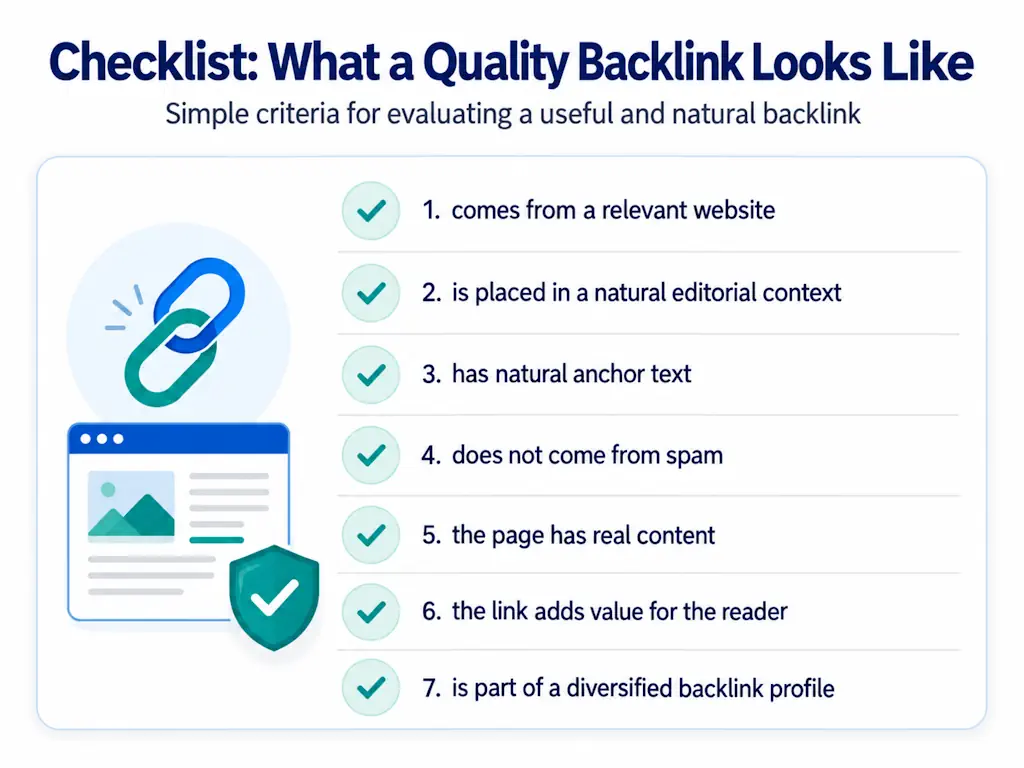
A good backlink usually comes from a relevant context on a credible website and uses natural anchor text. The existence of a link is not enough on its own: the page's subject, the quality of the surrounding content and the way the link is incorporated all matter.
| Criterion | What it means | Why it matters |
|---|---|---|
| Relevance | The linking website is related to your field | Helps establish the topical context |
| Editorial quality | The link appears in useful content rather than a spam page | Makes the recommendation more credible |
| Natural anchor text | The link wording reads naturally rather than being forced | Reduces the appearance of an artificial profile |
| Diversity | Links come from multiple relevant sources | Supports a healthier backlink profile |
| Context | The surrounding information is relevant | Helps both the reader and the search engine |
Dofollow, nofollow and anchor text
A few basic terms are useful when planning link building. A standard link, often called a dofollow link, can convey conventional SEO signals to its destination. A nofollow link carries an attribute indicating how the link should be treated. It can still bring visitors, increase visibility and contribute to a varied link profile.
Anchor text is the clickable wording of the link. A natural anchor might be a brand name, a URL, an informative phrase or a relevant term. A healthy strategy avoids excessive repetition of the same exact-match phrase, which can make the pattern look artificial.
Effective approaches to off-page SEO
A sound off-page strategy combines several approaches. Instead of depending on a single method, build a network of mentions, links, collaborations and resources that people have a reason to recommend.
Create useful content that attracts links naturally
High-quality content remains one of the best ways to attract organic backlinks. Comprehensive guides, case studies, infographics, checklists, practical resources and well-researched articles can earn citations when they address a real need.
Content that attracts links often does at least one of these things particularly well: it explains a subject clearly, organizes information better than other sources, offers useful examples or solves a specific problem for its reader.
Guest posts, sponsored articles and editorial collaborations
Guest posting and sponsored editorial content can be useful when approached carefully. The aim should be to publish something relevant on a website connected with your field, rather than simply obtaining a link.
A useful sponsored article needs value for the reader, an appropriate publishing context and natural links. If it is poorly written, placed on an unrelated site or built around forced anchor text, its SEO value may be limited. The source's emphasis is on editorial relevance and quality, not guaranteed ranking gains from paid placements.
Social media and content distribution
Social media is not a direct shortcut to higher rankings, and many social-platform links are marked nofollow. Distribution can nevertheless increase visibility, attract visitors and indirectly help a resource earn backlinks.
Use relevant channels to share guides, articles, free resources, case studies, updates and other material your community finds useful. Reaching more of the right people increases the opportunity for other websites to discover and mention the content.
Working with influencers
Influencer collaborations can support off-page SEO when their audience is relevant to your niche. They may bring visibility, traffic, recommendations, reviews and sometimes links to the website.
The collaboration should feel authentic rather than forced. Look for creators with a real connection to your field, propose suitable campaigns and make sure the resulting content benefits the audience rather than serving only as promotion.
The source article also references a video about working with influencers as an additional resource on this topic.
Brand mentions and digital PR
Brand mentions can contribute to reputation even when they do not include a direct link. Appearances in articles, interviews, podcasts, recommendation lists and other editorial material can help establish a perception of authority.
Digital PR may involve announcements, relationships with publications, interviews, events, webinars or contributions to relevant websites. Over time, these activities can support both brand visibility and the wider link-building strategy.
Suspicious links and mistakes to avoid
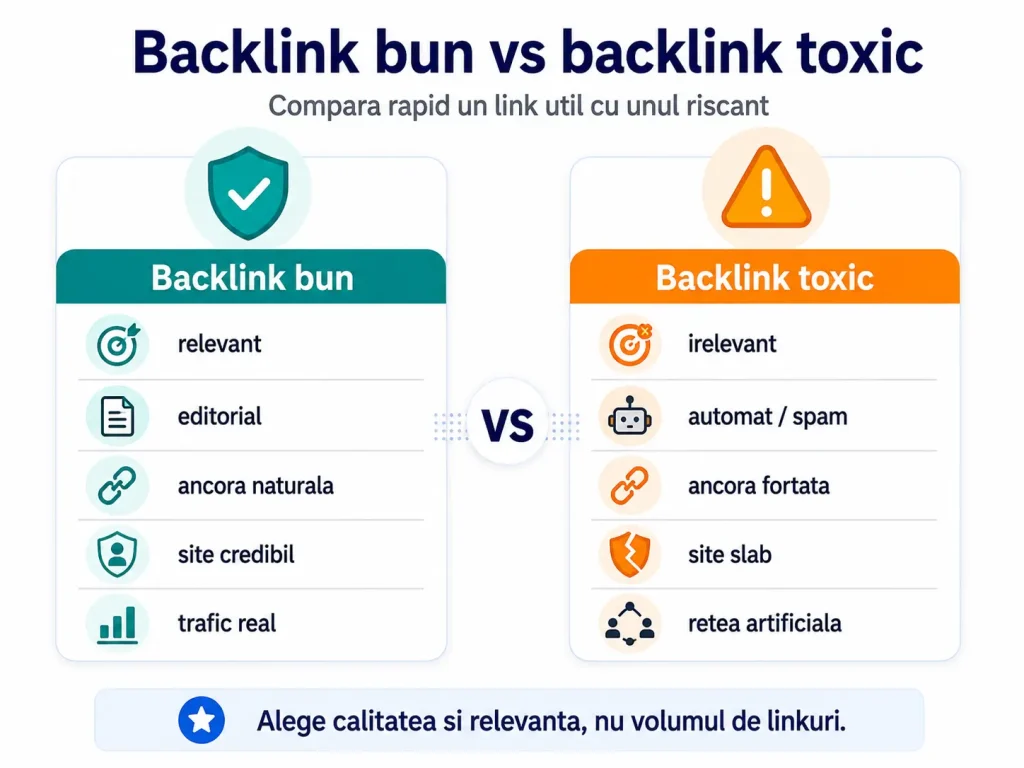
Some links provide little value, while others can create risks when they come from spam, unrelated or artificial sources. Monitoring belongs in a healthy off-page strategy alongside the work of earning new coverage.
Common link-building mistakes include:
- Obtaining links from websites that are entirely unrelated to your subject.
- Overusing the same anchor text.
- Publishing weak sponsored articles with no editorial value.
- Suddenly creating large numbers of artificial links.
- Ignoring suspicious or potentially harmful links.
- Choosing quantity over relevance.
- Neglecting content and on-page SEO.
Judge an opportunity by the source's quality, its subject, the editorial context and the natural placement of the link. Healthy link building develops gradually and focuses on trust rather than shortcuts.
How do you measure off-page SEO results?
Off-page SEO results do not appear overnight. They tend to emerge gradually as a site earns relevant links, develops authority and becomes more visible in search.
To evaluate the strategy, monitor:
- The number and quality of new backlinks.
- The domains linking to the website.
- The relevance of the pages containing those links.
- Changes in Google positions.
- Organic traffic.
- Referral traffic from external websites.
- New brand mentions.
- Conversions associated with organic visibility.
Do not look only at the total link count. A healthier profile combines varied, relevant sources with credible context and natural growth over time.
An off-page SEO checklist for WordPress sites
If you are starting off-page work for a WordPress site, use this checklist:
- Review the current backlink profile.
- Identify suspicious or irrelevant links for closer examination.
- Optimize the site's important pages first.
- Create content worth citing.
- Find relevant websites for editorial collaborations.
- Use sponsored editorial content only in suitable contexts.
- Vary anchor text and link sources naturally.
- Monitor brand mentions.
- Distribute content through relevant channels.
- Measure results over time, not only immediately after publication.
Reviewing existing links and referring domains gives you a clearer starting point. It shows whether you already have a useful foundation or whether problems need to be addressed before expanding the strategy.
Frequently asked questions about off-page SEO
What is off-page SEO optimization?
Off-page SEO includes external activities that help a website earn authority, trust and visibility. Common examples are backlinks, link building, brand mentions, sponsored editorial content, social media and digital PR.
What is link building?
Link building is the process of earning external links to your website. These links can help search engines understand the site's relevance and credibility, particularly when they come from high-quality sources.
What makes a high-quality backlink?
A high-quality backlink comes from a relevant website, appears in useful editorial content and uses natural anchor text. The quality and relevance of its source matter more than the total number of links.
Are sponsored SEO articles useful?
They can be useful when published on relevant websites and when they provide genuine information for readers. They should be considered within a wider authority and reputation strategy, rather than used only to obtain links.
What are toxic links?
The term commonly refers to backlinks from spam, unrelated or artificial sources. Such links warrant examination during a backlink audit so their context and any associated risks can be understood.
Is off-page SEO enough on its own?
No. It works best alongside on-page SEO, technical SEO and useful content. Backlinks can support a good website but cannot fully compensate for serious problems with content, speed or indexing.
How can I tell whether the strategy is working?
Review backlink changes, referring-domain quality, organic traffic, Google positions, referral visits and brand mentions. Evaluate progress over time rather than immediately after a link is published.
Conclusion
Off-page SEO is part of a complete search strategy. Relevant backlinks, brand mentions, editorial collaborations, sponsored content and digital PR can help a website gradually build authority and credibility.
Success does not come from shortcuts. A sound approach depends on relevance, useful content, authentic relationships, credible sources and regular monitoring. Link quality matters more than quantity, and a backlink profile should develop naturally over time.
To understand your starting point, review your existing backlinks and identify the opportunities, risks and sources that can support a stronger website reputation. Hostnary's managed SEO scope explains how opportunity analysis fits alongside technical and on-page work.